Day to Dusk Editing: What It Is & Why It Increases Clicks
In the competitive world of real estate marketing, standing out from the crowd isn't just beneficial; it's essential. One of the most powerful yet underutilized techniques in a photographer's arsenal is day-to-dusk editing. This process can turn an ordinary daytime property photo into a warm twilight image that stops scrollers in their tracks.
What Is Day-to-Dusk Editing?
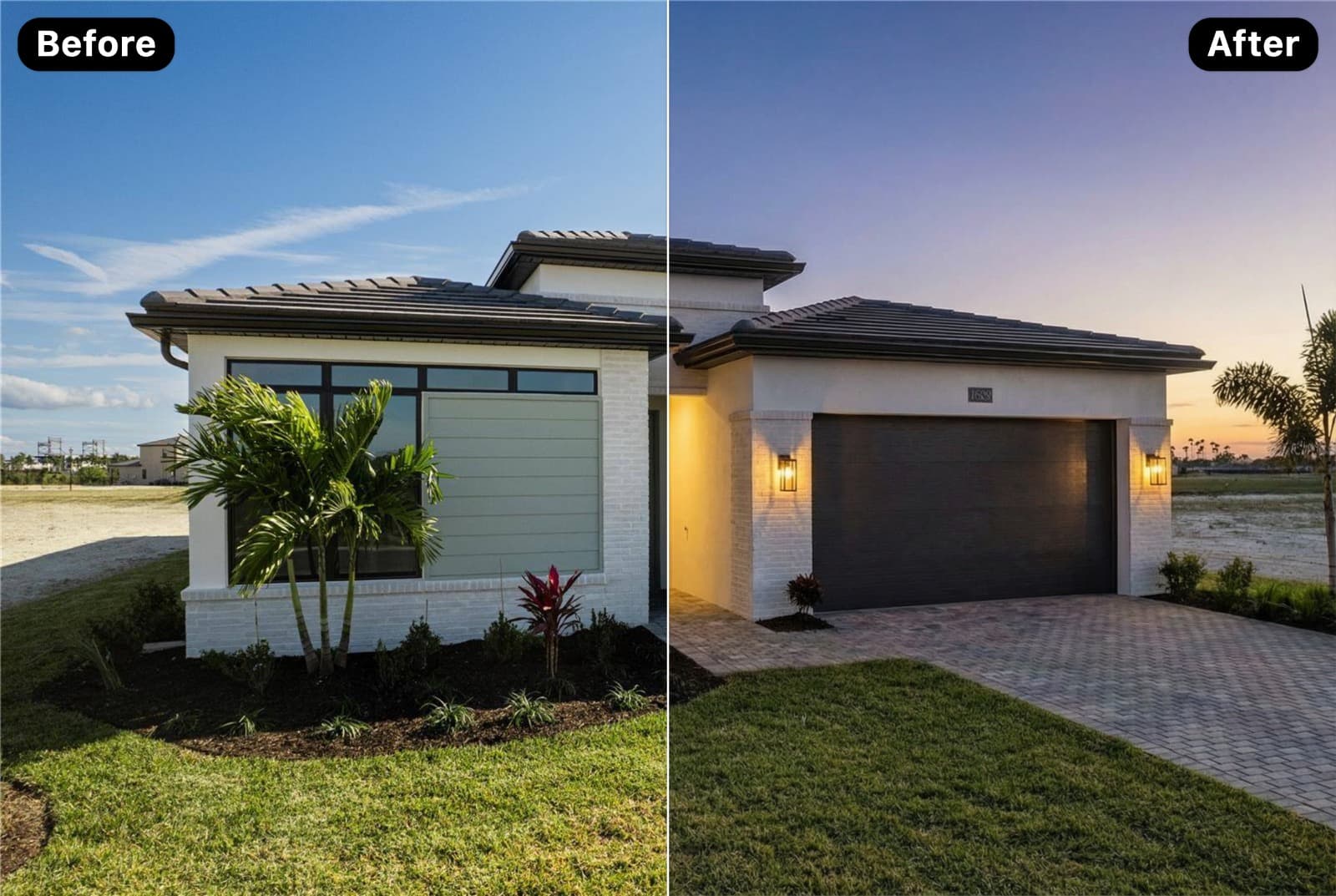
Day-to-dusk editing, also known as "twilight conversion" or "dusk transformation," is a photo editing technique that transforms images taken during daylight hours into photographs that appear to have been captured during the golden hour or twilight period: that magical time just after sunset when the sky glows with rich blues, purples, and oranges.
The process involves sophisticated digital manipulation of several key elements:
Sky Replacement: The bright daytime sky is replaced with a dramatic twilight gradient, featuring the characteristic deep blue tones and warm color transitions of dusk.
Lighting Adjustments: Interior and exterior lights are enhanced or added to create that warm, inviting glow that's characteristic of evening photography. Windows come alive with golden illumination, outdoor fixtures cast ambient light, and the property takes on an enchanting after-dark appeal.
Color Grading: The overall color temperature is shifted to reflect evening conditions. Cooler tones dominate the exterior while warm tones emanate from the home's interior and lighting fixtures.
Shadow and Contrast Enhancement: Shadows are deepened and adjusted to match the direction and quality of twilight lighting, creating depth and dimension that wouldn't exist in the original daytime shot.
Why Day-to-Dusk Editing Works: The Psychology Behind the Clicks
1. It Triggers Emotional Responses
Twilight has an inherent romance and tranquility that daylight simply can't match. Dusk images evoke feelings of warmth, comfort, and coming home after a long day. When potential buyers see a property bathed in the soft glow of evening light, they don't just see a house; they envision a lifestyle. This emotional connection is what transforms casual browsers into serious inquiries.
2. It Creates Visual Differentiation
Scroll through any real estate listing platform, and you'll notice a sea of bright, daytime exterior shots. They blend together in a monotonous parade of blue skies and sunshine. A dusk image immediately breaks this pattern. The human eye is naturally drawn to contrast and novelty, making twilight photos stand out in thumbnail grids and search results. In a digital marketplace where you have mere seconds to capture attention, this visual disruption is invaluable.
3. It Showcases Architectural Features
Dusk photography highlights a property's architectural lighting design in ways that daytime shots cannot. Landscape lighting, pathway illumination, architectural accent lights, and the warm glow from windows all become focal points. These elements demonstrate that the property has been thoughtfully designed and maintained, suggesting a higher level of quality and care.
4. It Signals Premium Quality
Twilight shots signal professionalism and investment in the listing. They communicate that the seller and agent are going the extra mile to present the property in its best light (literally). This perceived quality extends to assumptions about the property itself: if this much care went into the photography, buyers assume the same care has been invested in the home.
What Twilight Photos Can Do for a Listing
There's little independent, published data on twilight photos specifically, and results vary by market and platform. The best way to judge the impact is to track your own listings. Here's what agents and photographers typically look for:
- More clicks from search results: A twilight hero image stands out in a grid of daytime exteriors, which can lift the share of people who open the listing. Compare the views on your twilight listings against similar daytime-only ones.
- Stronger social media posts: Dusk images tend to look striking in feeds, which makes them a natural choice for listing announcements and ads.
- A more premium first impression: A polished hero image signals that the listing has been carefully marketed, which supports the overall presentation of the home.
Like any edit that changes how a property looks, a twilight conversion should be disclosed where your MLS or state requires it. California, for example, now requires a notice on altered listing images. Our guide to disclosure rules explains the basics.
When to Use Day-to-Dusk Editing
While twilight images are powerful, they work best in specific contexts:
- Luxury Listings: High-end properties benefit enormously from the sophisticated aesthetic of dusk photography. The investment in professional editing aligns with the premium positioning.
- Homes with Excellent Exterior Lighting: Properties with landscape lighting, architectural illumination, or attractive outdoor spaces are ideal candidates. The editing showcases these features that might otherwise go unnoticed.
- Modern or Contemporary Architecture: Clean lines and modern design elements are beautifully accentuated by the dramatic lighting contrast of twilight images.
- Feature Photos and Marketing Materials: Use dusk images as your hero shot on listings, in email campaigns, on social media, and in print materials to make a powerful first impression.
The Cost-Benefit Analysis
Traditional twilight photography requires photographers to shoot at a very specific time of day (usually only a 20-30 minute window), often necessitating multiple visits to the property, and is highly weather-dependent. A cloudy evening can ruin the shoot entirely.
Day-to-dusk editing eliminates these constraints. Photographers can shoot at any time during daylight hours when conditions are optimal, and editors can create perfect twilight conditions regardless of what the actual evening sky looked like. This flexibility saves time and money while delivering consistent, high-quality results.
Professional day-to-dusk editing by a human editor typically costs $15–50 per image, depending on the complexity and the provider. AI day-to-dusk conversion brings that down to a dollar or two per image, with results in seconds instead of a day or more. For a single hero image on a listing, that's a small cost for a much stronger first impression.
Best Practices for Maximum Impact
To get the most out of day-to-dusk editing, keep these guidelines in mind:
- Start with Quality Daytime Photos: The better your source image, the better your final result. Ensure the daytime shot is well composed, properly exposed, and architecturally sound.
- Don't Overuse: One or two stunning twilight images per listing is typically optimal. Use them strategically as your primary marketing photos, not for every angle.
- Maintain Realism: The best day-to-dusk edits look natural, not overly dramatized. Work with editors who understand lighting physics and can create believable results.
- Pair with Other Quality Images: Twilight shots should complement, not replace, a comprehensive photo package that includes well-lit interiors and daytime exteriors.
- Optimize for Platforms: Ensure your twilight images are properly sized and optimized for the various platforms where they'll appear, from listing sites to social media.
The Future of Real Estate Visual Marketing
As the real estate market becomes increasingly digital and competitive, visual marketing continues to evolve. Day-to-dusk editing represents a perfect intersection of technological capability, marketing psychology, and practical efficiency. It allows agents and sellers to create premium visual content without the logistical challenges and expense of traditional twilight photography.
In an environment where first impressions often happen on a smartphone screen during a quick scroll, the ability to stop that scroll with a stunning, emotion-evoking image can be the difference between a showing and a swipe-past. Day-to-dusk editing isn't just about prettier pictures; it's about marketing that earns attention.
Conclusion
Day-to-dusk editing has evolved from a luxury add-on to an affordable, everyday tool in real estate marketing. It differentiates listings and creates an emotional first impression, and with AI tools it costs very little to try. Whether you're selling a luxury estate or a well-appointed family home, the dramatic appeal of twilight photography can help your listing shine in a crowded marketplace.
Try it on your next listing's hero shot and compare the results against your daytime-only listings. In a market where every click counts, a twilight image might be the edge you've been looking for. For more on what makes buyers stop scrolling, read how buyers scroll through listings.