Is Virtual Staging Legal? What Realtors Should Know
Virtual staging has transformed how properties are marketed in the digital age. By digitally adding furniture, decor, and lifestyle elements to empty room photos, realtors can help potential buyers visualize a property's potential without the expense of physical staging. But as this technology becomes more sophisticated and widespread, one critical question keeps coming up: Is virtual staging legal?
The short answer is yes, virtual staging is completely legal. However, there are important disclosure requirements and ethical considerations that every realtor needs to understand to stay compliant and maintain client trust.
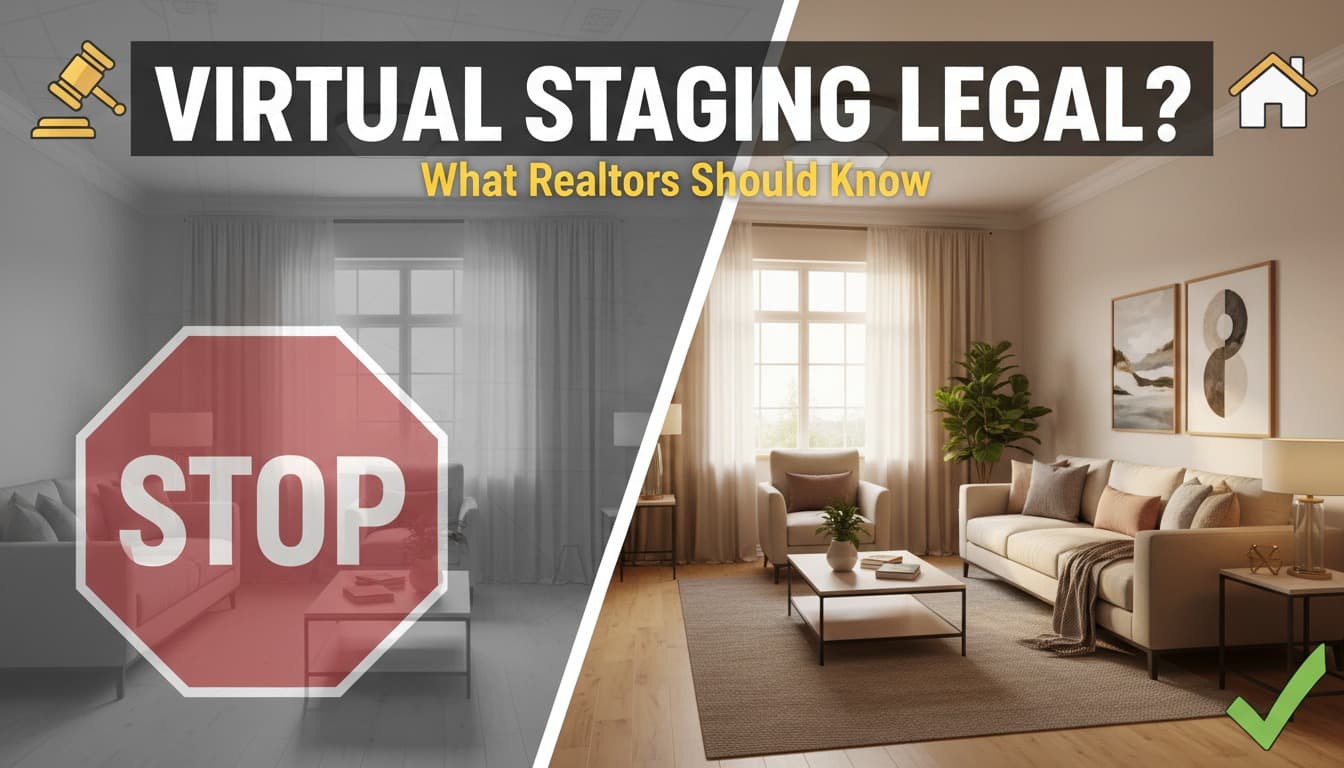
The Legal Landscape of Virtual Staging
Virtual staging itself is not illegal under federal law or in any U.S. state. The practice of digitally enhancing property photos falls under creative marketing, which is a standard part of real estate sales. However, the legality hinges entirely on one crucial factor: disclosure.
The issue isn't whether you can use virtual staging, it's whether you're being transparent about it. Failing to disclose that images have been digitally altered can cross into illegal territory, specifically violating fair housing laws and state specific real estate advertising regulations.
Why Disclosure Matters
Real estate is built on trust, and misrepresentation, even unintentional, can have serious consequences. Here's why disclosure is both a legal requirement and a business imperative:
Fair Housing Act Compliance
The Fair Housing Act prohibits discriminatory practices in housing sales and marketing. While virtual staging itself doesn't violate fair housing laws, deceptive advertising practices can. If a buyer feels misled by photos that appeared to show actual furnished rooms, this could be construed as deceptive trade practices.
State Real Estate Laws
Many states have specific regulations about advertising accuracy. For example, some state real estate commissions explicitly require disclosure when photos have been digitally altered or enhanced. California, New York, and Florida have particularly strict advertising standards that realtors should familiarize themselves with.
MLS Rules
Most Multiple Listing Services have their own policies regarding photo manipulation. Many MLS systems now require clear labeling when images are virtually staged, often mandating watermarks or captions that identify altered photos.
Best Practices for Legal Virtual Staging
To ensure you're using virtual staging legally and ethically, follow these essential guidelines:
Always Include Clear Disclosures
Every virtually staged photo should be clearly labeled. Common disclosure methods include:
- Watermarks directly on the image reading "Virtually Staged" or "Digitally Staged"
- Captions beneath photos stating "This image has been virtually staged"
- Prominent notes in the listing description explaining which photos are staged
- Asterisks or markers on individual photos with explanatory text
The disclosure should be impossible to miss. Don't bury it in fine print or use vague language like "photos enhanced" when you mean "digitally furnished."
Be Consistent Across Platforms
If you're listing a property on your website, the MLS, Zillow, and social media, ensure disclosures appear everywhere. A disclosure on the MLS means nothing if your Instagram post shows the same staged photo without explanation.
Don't Alter Structural Elements
Virtual staging should be limited to adding furniture and decor. Never digitally remove walls, change flooring, alter room dimensions, or make structural modifications. This crosses from staging into misrepresentation of the property itself, which can expose you to serious legal liability.
Keep Original Photos Available
Always maintain the original, unstaged photos and be prepared to provide them upon request. Some buyers or their agents will want to see the actual empty spaces, and you should have these readily available.
Document Your Process
Keep records showing which photos were staged, when they were created, and where disclosures were placed. This documentation can protect you if questions arise later.
The Risks of Non-Disclosure
Failing to properly disclose virtual staging isn't just an ethical lapse it can result in real consequences:
- License Disciplinary Action: State real estate boards can suspend or revoke licenses for deceptive advertising practices.
- Legal Liability: Buyers who feel deceived may pursue legal action for misrepresentation or fraud, even if the sale has closed.
- Financial Penalties: Some states impose fines for advertising violations, ranging from hundreds to thousands of dollars per violation.
- Reputation Damage: In the age of online reviews, a reputation for misleading marketing can devastate your business.
- Transaction Cancellations: Buyers who arrive at a showing expecting furnished rooms but find empty spaces may lose trust and walk away from the deal.
Common Misconceptions
"It's obvious the photos are staged, so I don't need to disclose it."
Wrong. Never assume buyers will figure it out on their own. Many people viewing listings online aren't experienced in spotting digital staging, especially as the technology becomes more realistic.
"I mentioned it in the listing description, so watermarks aren't necessary."
While a description disclosure is important, many buyers scroll through photos without reading the full text. Watermarks ensure disclosure at the point of viewing.
"Virtual staging is the same as using professional photography or wide-angle lenses."
Not legally. Professional photography and standard editing (lighting, color correction) are generally acceptable without disclosure because they show the actual property in better light. Virtual staging creates elements that don't exist, which is fundamentally different.
When Virtual Staging Makes Sense
Despite the disclosure requirements, virtual staging remains a powerful and legal tool when used appropriately:
- Vacant properties that are hard for buyers to visualize
- New construction where furniture helps show scale and function
- Outdated or poorly decorated spaces where staging can show potential
- Online marketing where you need to make a strong first impression
The key is using it as a helpful visualization tool, not a deceptive practice.
Creating a Virtual Staging Policy
Smart realtors create a written virtual staging policy for their practice. This policy should outline:
- When and how you'll use virtual staging
- Your disclosure procedures across all platforms
- Quality standards for staged images (realism, appropriateness)
- Client approval processes
- Documentation and record keeping practices
Having a clear policy protects you, sets client expectations, and ensures consistency across your listings.
The Bottom Line
Virtual staging is absolutely legal and it's a valuable marketing tool when used correctly. The key to staying on the right side of the law is simple: be transparent. Clear, prominent disclosure protects you legally, maintains buyer trust, and upholds the integrity of the real estate profession.
As virtual staging technology continues to advance, regulations may evolve. Stay informed about your state's specific requirements, follow your MLS guidelines, and when in doubt, over-disclose rather than under-disclose. Your reputation and license are worth far more than any shortcuts in marketing could ever provide.
Used ethically and legally, virtual staging helps buyers envision their future home while giving you a competitive edge in a crowded market. Just remember: transparency isn't just the law it's good business.