How Virtual Staging Helps Sell Vacant Homes Faster
Vacant homes face a critical disadvantage in today's real estate market: they're invisible, forgettable, and often scroll past without a second glance. While empty rooms offer a blank canvas in theory, in practice they create a psychological barrier that prevents buyers from seeing potential, visualizing their future, or feeling any emotional connection to the space.
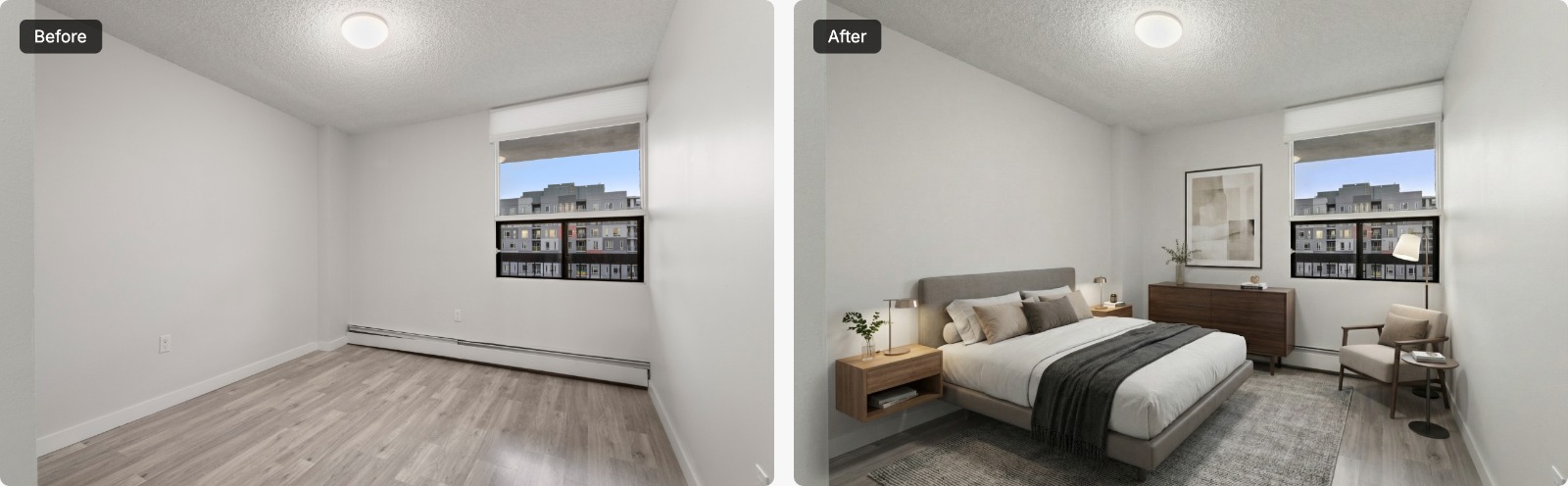
Virtual staging has emerged as the solution to this challenge, transforming empty rooms into beautifully furnished spaces that capture attention, spark imagination, and accelerate the path from listing to sold. Here's exactly how virtual staging helps vacant homes sell faster, and why it's become essential rather than optional in 2026.
The Vacant Home Problem: Why Empty Rooms Don't Sell
Buyers Can't Visualize Empty Spaces
Most homebuyers find it hard to look at four bare walls and accurately imagine how furniture will fit, how the room will function, or what the space will feel like when it's their home. What seems obvious to architects and designers, that a 14x16 room can comfortably hold a king bed, two nightstands, and a dresser, requires mental gymnastics for most buyers.
Empty rooms trigger questions instead of excitement: "Will my couch fit?" "Is this bedroom too small for our furniture?" "Where would we eat dinner?" Each unanswered question creates friction in the buying process, and friction kills momentum.
Agents see this every day. In the National Association of REALTORS® 2025 Profile of Home Staging, 83% of buyers' agents said staging makes it easier for a buyer to visualize a property as their future home. When buyers can't picture a space, that friction can mean fewer showings and slower decisions.
Empty Homes Photograph Terribly
Real estate is now a visual-first industry. Buyers scroll through dozens of listings before ever scheduling a showing, making split-second decisions based almost entirely on photos. Empty rooms create visual problems that professional photography cannot overcome:
Scale distortion: Without furniture for reference, rooms appear either cavernously large (creating concerns about heating costs and furnishing expenses) or awkwardly small (triggering immediate disqualification from consideration).
Lack of focal points: The human eye seeks visual anchors: a beautiful headboard, a statement sofa, an inviting dining setup. Empty rooms offer nothing to look at, creating boring, forgettable photos that blend together as buyers scroll.
Emphasizing flaws: Without furniture to draw the eye, buyers fixate on imperfections: carpet stains, wall scuffs, outdated fixtures, or awkward architectural features. In furnished rooms, these same flaws fade into the background.
Cold, institutional feel: Empty rooms photograph like office buildings, storage units, or abandoned spaces. They lack the warmth and personality that make a house feel like a potential home.
The Online Engagement Problem
Online, an empty room gives buyers very little to react to. Photos of bare walls and floors tend to blend together in search results, and there's no focal point to make someone stop, save the listing, or share it with a partner. That matters because views, saves, and inquiries are the leading indicators of real interest: when they're weak, showings and offers usually follow suit.
The Pricing Perception Problem
Vacant homes can also carry an unspoken question mark. Buyers may wonder whether an empty property needs more work than it does, or why it's empty in the first place: "What's wrong with it?" "How long has it been sitting?" Even a move-in-ready home can feel like a project when every room is bare, and that uncertainty can show up in weaker offers.
How Virtual Staging Solves Each Problem
Creates Instant Visualization
Virtual staging eliminates the imagination gap by showing buyers exactly how rooms can function. When a buyer sees a beautifully staged primary bedroom with a king bed, nightstands, lamps, and décor, they're no longer guessing about furniture fit or room functionality; they're seeing proof.
This visualization extends beyond individual rooms to lifestyle understanding. A virtually staged home office with a desk, bookshelf, and reading chair tells buyers "this home supports work-from-home lifestyles." A staged flex room shows that the awkward extra space can be a playroom, a gym, or a guest room.
Virtual staging answers the fundamental question every buyer asks: "Can I see myself living here?" When the answer is immediately visible in photos, buyer interest accelerates.
Transforms Photos into Scroll-Stoppers
Virtually staged photos compete effectively against the best-presented listings in any market. Professional virtual staging creates:
Visual hierarchy and focal points: Each room has a clear center of interest: an upholstered headboard, a sectional sofa, a dining table set for dinner. These focal points give the eye somewhere to land and create memorable images.
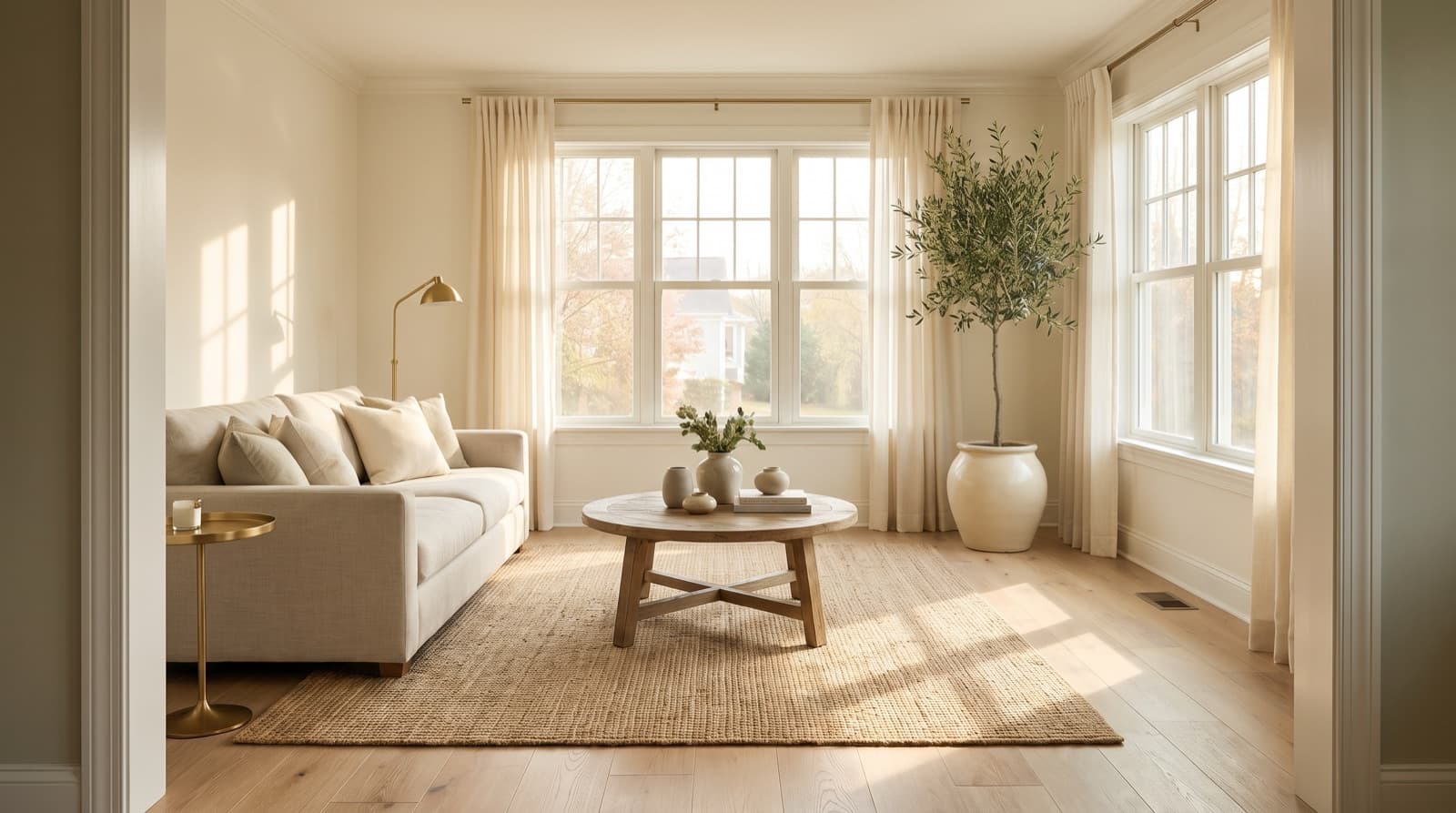
Warmth and personality: Furniture, artwork, plants, and accessories transform sterile spaces into inviting environments that feel like homes rather than empty boxes.
Scale and proportion clarity: Appropriately sized furniture provides instant context for room dimensions, eliminating buyer concerns about whether their belongings will fit.
Distraction from minor flaws: A beautifully staged room draws attention to its best features while de-emphasizing carpet wear, wall scuffs, or dated fixtures that would dominate photos of empty rooms.
The result: a vacant listing that can hold its own next to furnished and traditionally staged competitors, at a fraction of the cost of physical staging.
Accelerates the Decision-Making Process
Virtual staging shortens the buyer's journey from initial interest to offer submission by reducing friction at every stage:
Stage 1 - Online Discovery: Staged photos capture attention and earn clicks that vacant photos don't receive.
Stage 2 - Initial Interest: Buyers spend more time viewing staged listings, examining each room and imagining themselves in the space.
Stage 3 - Showing Requests: Higher engagement translates to more showing requests. Buyers who've seen beautifully staged photos arrive at showings already emotionally invested.
Stage 4 - In-Person Viewing: Buyers who've studied virtually staged photos can more easily visualize furniture placement during empty showings, making the empty space less jarring.
Stage 5 - Offer Decision: The emotional connection created by staged photos, even though buyers know the furniture isn't real, creates urgency and desire that translates into faster, stronger offers.
Every stage that moves a little faster shortens the overall path from listing to offer, and for a vacant home, every week saved is money back in the seller's pocket.
Generates Competitive Pricing Power
Virtual staging helps vacant homes compete on more equal footing with occupied and traditionally staged properties, so the listing is judged on its space and features rather than its emptiness.
In many cases, virtual staging allows sellers to price aggressively from day one rather than starting high and reducing after the property sits. Fresh, well-priced listings with great photos generate immediate showings and often multiple offers, while overpriced vacant listings train buyers to scroll past and wait for inevitable reductions.
And the cost is small. Human-designed virtual staging typically runs $20–$75 per photo, while AI virtual staging can cost a dollar or two per photo, so staging a full home costs less than a single week of carrying costs.
The Numbers: What Each Extra Week Costs a Vacant Home
Every week a vacant home sits on the market costs the seller money: mortgage interest, property taxes, insurance, utilities, and upkeep keep running whether anyone lives there or not. That's why even a modest reduction in time on market matters so much more than the price of staging.
An illustrative example (plug in your own numbers):
- Mortgage interest, taxes, and insurance: about $3,000 per month
- Utilities and basic upkeep: about $400 per month
- Total carrying cost: roughly $800 per week
Against that, AI virtual staging for ten listing photos costs roughly $10–$20. If better photos help the home sell even one week sooner, or avoid a single price reduction, the staging has paid for itself many times over.
What does the research say about staging's effect on buyers? The most widely cited source, NAR's 2025 Profile of Home Staging, found that 83% of buyers' agents say staging makes it easier for a buyer to visualize the property as their future home. Results vary by market, so the best evidence is your own: track views, saves, and showing requests on listings before and after you add staged photos.
Virtual Staging Strategies That Maximize Speed-to-Sale
Strategy 1: Stage Every Living Space
Many sellers make the mistake of staging only 2-3 main rooms to save money. This creates an inconsistent buyer experience: some rooms look amazing while others remain empty and forgettable.
The complete staging approach: Living room, Dining room, Kitchen (countertop styling, table setting if applicable), Primary bedroom, Primary bathroom (towel styling, décor), Secondary bedrooms (each staged differently: guest room, office, nursery), Bonus spaces (home gym, playroom, media room, craft room), Outdoor spaces (patio furniture, grill setup).
The marginal cost of staging additional rooms is minimal, while the impact on buyer perception is substantial. Comprehensive staging creates a complete lifestyle vision that partial staging cannot achieve. (If budget or time is tight, here's how to decide which rooms matter most.)
Strategy 2: Match Staging to the Property
Generic virtual staging uses one-size-fits-all furniture that may not suit the home. Strategic staging matches furniture styles and room functions to the property's type, size, and price point. (Keep your listing copy focused on the property rather than on who should live there; that's both better marketing and a fair housing best practice.)
- Urban condos and apartments: Modern, minimalist furniture, a home office corner, compact and efficient placement, contemporary art and décor.
- Suburban 3–4 bedroom homes: Transitional or contemporary styles, flexible secondary bedrooms (guest room, office, bedroom), comfortable living areas, mudroom and storage staging.
- Single-level and low-maintenance homes: Comfortable, classic furniture, emphasis on the main-floor primary suite, a guest bedroom, a hobby or flex room.
- Luxury properties: Designer-style furniture, statement art, sophisticated color palettes, statement lighting, high-end finishes highlighted.
For more on choosing styles, see our furniture style guide.
Strategy 3: Use Multiple Style Options to Test Market Response
One advantage of virtual staging over traditional staging is the ability to create multiple furniture styles for the same space at minimal additional cost. This A/B testing approach allows you to discover which aesthetic resonates most with active buyers in your market.
Strategy 4: Combine Virtual Staging with Professional Photography
Virtual staging only works if you start with high-quality, well-lit photos of empty rooms. Professional photography creates proper lighting, correct angles, and wide-angle shots without distortion that are essential for making virtual furniture look realistic. Shooting yourself? Follow our guide to photographing empty rooms.
Strategy 5: Create a Virtual Tour Experience
Static photos are powerful, but interactive virtual tours take engagement to the next level. Virtual tours qualify buyers before showings and provide 24/7 showing capability, creating differentiation that justifies the additional investment.
Common Virtual Staging Mistakes That Slow Sales
Mistake 1: Unrealistic Furniture Sizing
The fastest way to undermine virtual staging credibility is using furniture that's clearly the wrong scale. When buyers arrive at showings and realize the virtually staged king bed would never fit in the actual room, trust evaporates and offers disappear.
Mistake 2: Failing to Disclose Virtual Staging
Ethical and legal requirements demand clear disclosure that photos include virtual staging. Proper disclosure includes labels on the images, listing description statements, access to the unstaged originals, and signage at the property. See Is Virtual Staging Legal? for details.
Mistake 3: Inconsistent Staging Quality
Low-quality virtual staging can do more harm than no staging at all. Poor virtual staging is obvious through cartoonish furniture, mismatched lighting, or blurry images, and it makes buyers wonder what else about the listing isn't quite right. More in common virtual staging mistakes.
Mistake 4: Staging Style Mismatch
Putting ultra-modern furniture in a 1920s craftsman, or heavy traditional pieces in a contemporary loft, creates cognitive dissonance that reduces buyer interest rather than enhancing it. Respect the home's architectural style.
Mistake 5: Over-Staging or Under-Staging
Over-staging makes rooms feel small and cluttered, while under-staging fails to define room purpose. A good rule of thumb is to furnish rooms comfortably but not fully, leaving visual breathing room.
Mistake 6: Ignoring Outdoor Spaces
Many sellers stage all interior rooms beautifully while leaving outdoor areas completely empty. Patios, decks, balconies, and yards are selling features that deserve staging attention to show usability and maximize perceived living space.
The Bottom Line: Virtual Staging Accelerates Sales
Vacant homes start at a disadvantage: buyers struggle to picture them, and every week on the market costs the seller money. Virtual staging addresses both problems for a tiny fraction of the cost of physical staging. For most sellers, the question isn't whether to use virtual staging; it's which rooms to stage first.
The math is simple: when staging costs less than a single week of carrying costs, it's one of the easiest decisions in the home-selling process.
In 2026's visual-first, mobile-first, scroll-first real estate market, beautiful photos aren't a luxury; they're the minimum requirement for being seen. Virtual staging transforms vacant homes from invisible to irresistible, from forgettable to must-see, and from slow sales to fast closes.
The question isn't whether you can afford to virtually stage your vacant home. The question is whether you can afford not to.