Virtual Staging vs. Traditional Staging: A Full Cost Breakdown (2026)
The staging debate is no longer about whether to stage; it's about which method delivers the best return on investment. As we navigate the 2026 real estate market, both virtual and traditional staging have evolved significantly, each offering distinct advantages depending on your property, budget, and sales timeline.
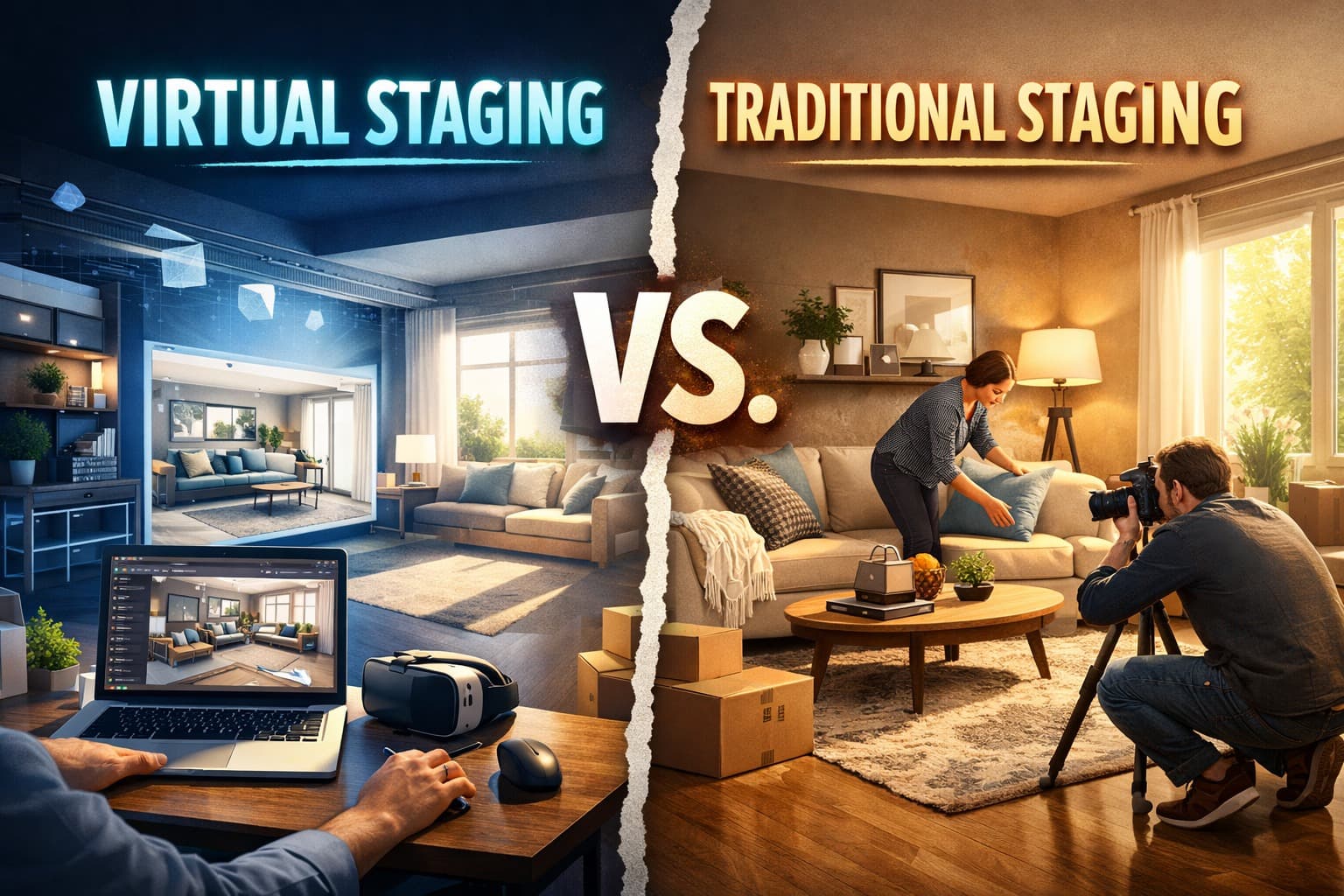
Let's break down the real costs, hidden fees, and ROI math that matter most to sellers and agents making this decision. One note before we start: staging prices vary widely by market, company, and property, so treat the ranges below as rough estimates and get local quotes before you budget.
Understanding the Two Approaches
Traditional staging involves physically furnishing and decorating a property with real furniture, décor, and accessories. A professional stager selects pieces that complement the home's architecture, maximize space perception, and appeal to likely buyers. The furniture remains in place throughout the listing period, typically 30-90 days.
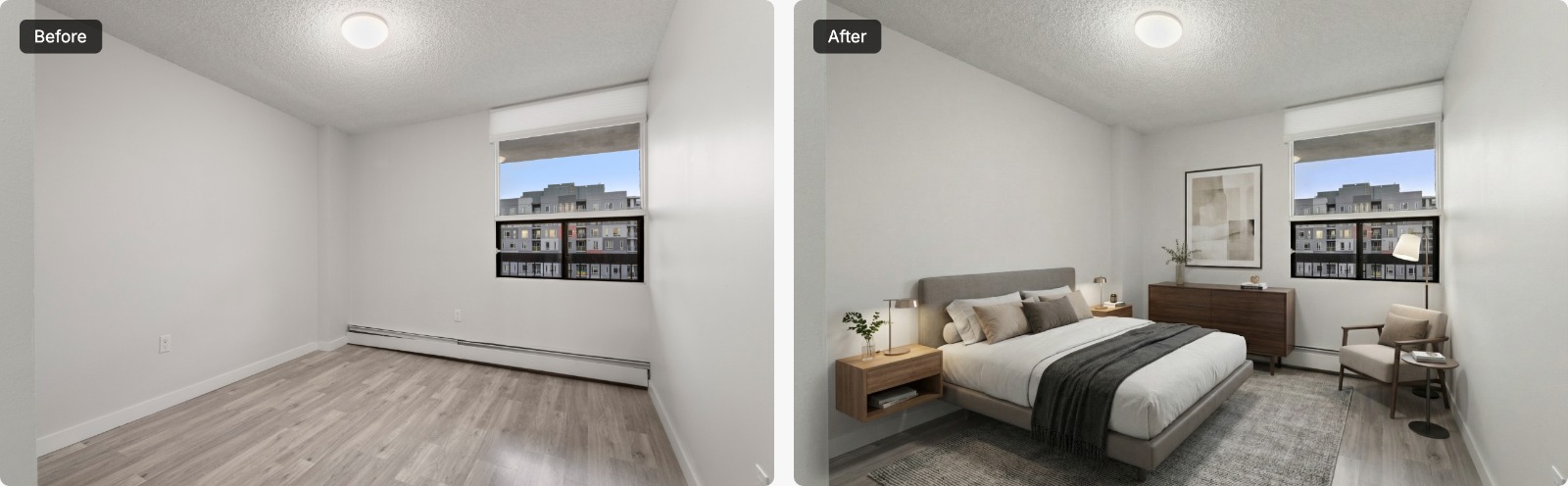
Virtual staging uses advanced software and AI technology to digitally insert photorealistic furniture and décor into photos of empty rooms. Professional editors or AI-powered platforms transform vacant spaces into beautifully furnished environments that exist only in listing photos and virtual tours.
Both methods serve the same purpose: helping buyers visualize the potential of a space and creating an emotional connection that drives offers. The path to that goal, however, involves dramatically different investments and considerations.
Traditional Staging: The Complete Cost Breakdown
Initial Consultation and Design ($200-$600)
Most professional stagers begin with an on-site consultation to assess the property, discuss target buyers, and create a staging plan. Some companies waive this fee if you proceed with full staging, while others charge separately regardless. In competitive markets like San Francisco, New York, or Miami, consultation fees can reach $600-800 for luxury properties.
Monthly Rental Fees: The Biggest Expense
Vacant Home Staging (Most Common Scenario):
- Starter Package (Living room + Dining room): $2,500-4,000/month
- Mid-Range Package (Living, Dining, Primary Bedroom, Kitchen accessories): $4,000-6,500/month
- Full-Home Package (All main living spaces + 2-3 bedrooms): $6,500-10,000/month
- Luxury Properties (High-end furniture, artwork, premium pieces): $10,000-25,000/month
Occupied Home Staging (Partial staging or editing):
- Decluttering consultation and rearrangement: $500-1,500 (one-time)
- Furniture rental to supplement existing pieces: $800-2,500/month
- Accessory packages (throw pillows, artwork, plants): $300-800/month
Setup and Removal Fees ($800-2,500)
Delivery, installation, and removal aren't included in monthly rental fees. Professional movers transport furniture, stagers arrange pieces, and at listing's end, everything must be removed.
- Standard properties (under 3,000 sq ft): $800-1,500
- Larger homes (3,000-5,000 sq ft): $1,500-2,200
- Luxury estates or difficult access: $2,200-3,500
- Properties with stairs, long driveways, or limited access add 20-40% to base fees
Storage Fees (If Applicable) ($200-600/month)
If your home is occupied and requires storing the owner's furniture during staging, factor in climate-controlled storage. This often-overlooked cost can add significantly to total expenses, especially for extended listing periods.
Insurance and Damage Protection ($150-400)
Many staging companies require insurance coverage or damage deposits. While most stagers carry their own insurance, some contracts make sellers liable for damage to rental furniture during the staging period. Review contracts carefully regarding liability for spills, pet damage, or buyer misconduct during showings.
Real-World Traditional Staging Cost Examples
Scenario 1: Quick Sale in Hot Market
- Property: 2,200 sq ft suburban home
- Package: Living room, dining room, primary bedroom
- Time on market: 18 days (paid for full month)
- Consultation: $300
- Monthly rental: $3,800
- Setup/removal: $1,200
- Total Cost: $5,300
Scenario 2: Average Market Timeline
- Property: 3,500 sq ft family home
- Package: Full main floor + 3 bedrooms
- Time on market: 67 days (3 months paid)
- Consultation: $450
- Monthly rental: $6,200 x 3 months = $18,600
- Setup/removal: $1,800
- Total Cost: $20,850
Scenario 3: Luxury Market Extended Timeline
- Property: 5,800 sq ft estate
- Package: Full home with premium furnishings
- Time on market: 142 days (5 months paid)
- Consultation: $800
- Monthly rental: $12,500 x 5 months = $62,500
- Setup/removal: $3,200
- Special lighting and art installation: $2,800
- Total Cost: $69,300
Virtual Staging: The Complete Cost Breakdown
AI-Powered Virtual Staging (The Budget Game-Changer)
The 2026 real estate market has been revolutionized by AI virtual staging platforms that deliver professional-quality results at a fraction of traditional virtual staging costs. These automated systems use machine learning and computer vision to instantly stage rooms with photorealistic furniture.
AI Virtual Staging Pricing:
- Cost per photo: from about $1 to $20, depending on the platform and plan
- Turnaround: seconds to a few minutes
- Includes: Automated furniture placement, style selection, AI-generated décor
- Best for: Budget-conscious sellers, investors, high-volume agents, quick turnarounds
How AI staging platforms differ:
- Pricing model: Some sell one-time credit packs, others require a monthly subscription. Credit packs suit agents with uneven listing volume; subscriptions can work out cheaper only if you use them every month.
- Realism: The biggest difference between tools. Look closely at shadows, scale, and whether the walls, windows, and floors stay exactly as photographed.
- Style range and control: How many interior styles you can choose from, and whether you can add your own instructions.
- Extra tools: Furniture removal, day-to-dusk conversion, and floor plans, which can save you from paying a second vendor.
- Output resolution: Make sure the images are large enough for your MLS and print marketing.
For reference, AI Virtual Staging uses one-time credit packs from $19 for 10 images to $99 for 100 images ($0.99–$1.90 per photo), with no subscription, and your first image is free. Whatever tool you use, the best test is to stage the same photo on two or three platforms and compare the results side by side.
Professional Virtual Staging (Human-Designed)
While AI has made huge strides, professional human designers still lead in customization and luxury applications.
Basic Professional Virtual Staging:
- Cost per photo: $25–75
- Turnaround: 24-72 hours
- Includes: Human-designed furniture placement, custom décor selection
- Best for: Sellers wanting more control than AI offers
Premium Professional Virtual Staging:
- Cost per room: $75-150
- Turnaround: 48-96 hours
- Includes: Custom furniture selection, detailed accessories, style matching, brand-name pieces
- Best for: Mid to high-end properties wanting polished, customized results
Luxury Professional Virtual Staging:
- Cost per room: $150-400
- Turnaround: 5-10 days
- Includes: Designer furniture, custom art, unique pieces, multiple revision rounds, artistic direction
- Best for: Luxury listings, high-stakes presentations, properties over $2M
Package Pricing Options
Many virtual staging companies offer package deals that reduce per-room costs:
- 5-room package: $250-500 (effective cost: $50-100/room)
- 10-room package: $400-800 (effective cost: $40-80/room)
- Full property package (15+ rooms): $600-1,200 (effective cost: $35-75/room)
Some virtual staging companies also offer monthly plans for agents with steady volume. Compare the effective per-photo price against how many photos you actually stage each month before committing.
Additional Virtual Staging Services
Virtual Renovation/Remodeling:
- Kitchen updates (new cabinets, countertops, appliances): $150-400/image
- Bathroom renovations: $150-350/image
- Flooring changes: $75-200/image
- Wall color changes: $25-75/image
- Exterior curb appeal enhancements: $100-300/image
360° Virtual Tours with Staging:
- Per room: $200-500
- Full property: $1,500-4,000
- Includes interactive navigation and staged environments
Virtual Twilight Conversions:
- Exterior photo enhancement to golden/twilight hour: $30-100/image
- Creates dramatic curb appeal from daytime photos
Real-World Virtual Staging Cost Examples
Scenario 1: Budget-Conscious Seller Using AI Staging
- Property: 2,200 sq ft suburban home
- Rooms staged: Living room, dining room, kitchen, primary bedroom, 2 additional bedrooms, office (7 rooms)
- Service: Mid-tier AI virtual staging platform
- Cost per room: $12
- Total Cost: $84
Scenario 2: Standard Empty Home with Professional Staging
- Property: 2,200 sq ft suburban home
- Rooms staged: Living room, dining room, kitchen, primary bedroom, 2 additional bedrooms, office (7 rooms)
- Service: Premium professional virtual staging
- Cost per room: $85
- Total Cost: $595
Scenario 3: High-Volume Agent Using AI Credit Packs
- Properties: 4 homes per month, averaging 8 photos each (32 photos total)
- Service: AI virtual staging with a 100-image credit pack at $99
- Effective cost per photo: $0.99
- Monthly cost: about $32 for all 32 photos
- Per-property cost: about $8
Scenario 4: Comprehensive Professional Virtual Package
- Property: 3,500 sq ft family home
- Rooms staged: All main living areas (12 rooms total)
- Additional: Virtual kitchen renovation, virtual twilight exterior
- Base staging (12 rooms at $70 each): $840
- Kitchen renovation: $250
- Twilight exterior: $75
- Total Cost: $1,165
Scenario 5: Hybrid AI + Professional Approach
- Property: 3,500 sq ft family home
- Main rooms (living, dining, primary): Professional staging at $85 each = $255
- Secondary rooms (9 rooms): AI staging at $12 each = $108
- Kitchen renovation: $250
- Total Cost: $613
- Savings vs. all-professional: $552 (47% cost reduction)
Scenario 6: Luxury Property Complete Digital Transformation
- Property: 5,800 sq ft estate
- Rooms staged: Full home (18 rooms)
- Additional services: Virtual 360° tour, multiple style options, custom artwork
- Luxury professional staging package (18 rooms): $2,800
- 360° virtual tour: $3,200
- Multiple style variations (3 different looks for main rooms): $1,200
- Total Cost: $7,200
The Hidden Costs Nobody Talks About
Traditional Staging Hidden Costs
Extended Timeline Penalties: The biggest hidden cost of traditional staging is uncertainty. If your home doesn't sell within the initial staging period, you're locked into additional monthly fees. A home that sits for 120 days instead of the expected 60 days doubles your staging investment, potentially turning a $12,000 expense into $24,000.
Utility Costs: Staged homes require climate control to protect furniture and create comfortable showing environments. Heating or cooling a vacant 3,000 sq ft home can easily cost a few hundred dollars a month, and those costs compound over extended listing periods.
Maintenance and Cleaning: Professionally staged homes require professional cleaning between showings and weekly maintenance visits. Budget $150-300/month for cleaning services to maintain that showroom appearance.
Last-Minute Additions: After initial staging, agents often request additional pieces (a statement lamp, larger artwork, outdoor furniture), each carrying additional rental fees and delivery charges.
Cancellation Penalties: Most staging contracts require 30-day notice for removal. If your home sells on day 15 of a month, you're still paying for the full month, and sometimes into the next month depending on scheduling.
Virtual Staging Hidden Costs
Required Professional Photography: Virtual staging requires high-quality, well-lit photos of empty rooms. If you don't have professional photos, you'll need to hire a photographer first ($300-800), though you'd likely do this anyway for any listing.
Revision Requests: With human-designed virtual staging, basic packages often include one round of revisions, and extra rounds are charged per image. If you're indecisive about furniture styles, costs can escalate. With AI staging, a new version typically costs one more credit and takes seconds.
Disclosure Requirements: Many MLSs and some states (California, for example) require conspicuous disclosure that images are virtually staged. Some services charge for labeled versions; others, including AI Virtual Staging, can add a "Virtually Staged" label for free. See Is Virtual Staging Legal?
Re-staging for Price Reductions: If the property doesn't sell and you adjust pricing or positioning, you might want to re-stage with different furniture styles. Each re-stage is a new expense.
Lost Buyer Trust: While not a direct cost, misleading virtual staging that significantly misrepresents room sizes or conditions can result in frustrated buyers, wasted showings, and damaged agent reputation.
The ROI Analysis: Which Delivers Better Returns?
What the Research Says
The most widely cited data comes from the National Association of REALTORS® Profile of Home Staging, a survey of agents. In the 2025 edition, 83% of buyers' agents said staging makes it easier for a buyer to visualize the property as their future home, and agents named the living room (37%), primary bedroom (34%), and kitchen (23%) as the most important rooms to stage. The report covers staging in general, so it tells you staging helps buyers, not exactly how much it will change your sale price. Be wary of any article that promises a specific percentage.
A Better Way to Think About ROI: Break-Even
Instead of guessing at price increases, ask a simpler question: how much would staging need to help for it to pay for itself?
Traditional staging on a $400,000 home at $5,000–$8,000 needs to add roughly 1.25–2% to the sale price (or save several months of carrying costs) just to break even. That can be worth it in some markets and for some properties, but it's a real bet.
Professional virtual staging at around $600–$800 for a full home needs to add about 0.2% to the price, or save roughly a week of carrying costs.
AI virtual staging at $10–$100 for a full home needs to save a day or two of carrying costs, or avoid a single small price reduction. At that cost, the downside is almost nothing.
That's the real ROI difference: not a guaranteed percentage, but how little has to go right for each option to pay off.
Cost Predictability
Virtual staging's other advantage is that its cost is fixed. You pay once, whether the home sells in 10 days or 150 days, while traditional staging rental fees keep running every month the home is on the market.
Market-Specific Recommendations
When Traditional Staging Makes More Sense
- Luxury Properties ($1M+): High-end buyers often expect to experience the lifestyle in person, and a five-figure staging budget is small relative to the price.
- Homes with Layout Challenges: Properties with awkward configurations benefit from physical staging that demonstrates functional placement.
- Competitive Markets with High Inventory: Physical staging creates a memorable, emotional experience.
- Quick-Sale Markets: In hot markets, staging costs are minimized while impact is maximized.
When Virtual Staging Makes More Sense
- Budget-Constrained Sellers: AI staging for a whole home often costs less than $50, which makes professional-looking presentation accessible to everyone.
- Investment Properties and Flips: Cost certainty allows for accurate budget forecasting.
- High-Volume Real Estate Agents: Low per-photo costs make it practical to offer staging on every listing.
- Uncertain Market Timelines: Virtual staging eliminates open-ended monthly fees. (For vacant listings specifically, see how virtual staging helps sell vacant homes.)
The Hybrid Approach: Best of Both Worlds
Savvy sellers use strategies like:
- AI Virtual First, Upgrade If Needed: Start with AI staging (often under $50), and move to traditional staging only if the listing needs it.
- AI for Secondary Rooms, Professional for Main Spaces: Mix quality levels to optimize budget.
- Virtual Staging with Key Physical Pieces: Virtual full home + physical living room.
- Virtual for Online, Physical for Events: Virtual all-time + physical for open house weekends.
Closing Thoughts: The 2026 Staging Landscape
The emergence of high-quality AI staging has fundamentally democratized home presentation. Every seller can now afford professional-looking listing photos. Match your method to your price point, decide which rooms matter most (our guide on how many rooms to stage helps), and remember: the worst staging decision is doing nothing at all.